Getting Around Japan
Japan's world-famous transportation network is efficient, punctual, and surprisingly easy to navigate. Here's everything you need to know.
Japan's Legendary Bullet Train
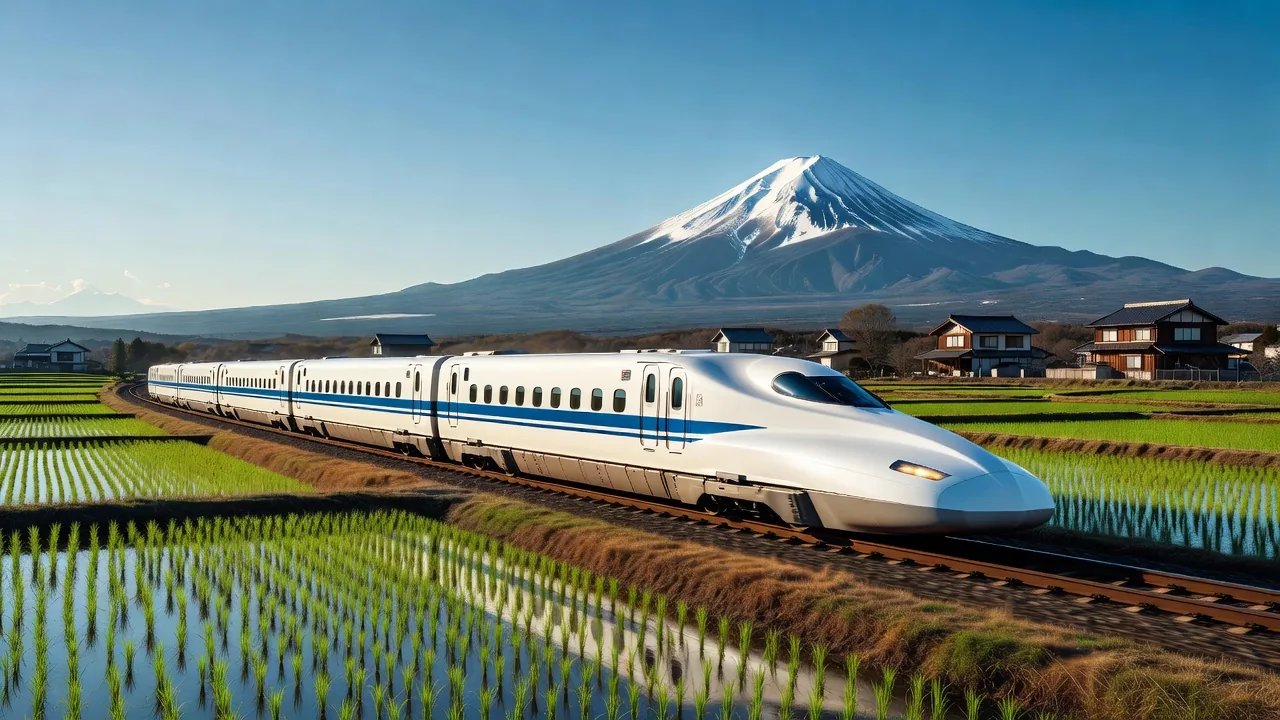
The Shinkansen (新幹線) is arguably Japan's greatest engineering achievement and the backbone of intercity travel. Since its debut in 1964, no passenger has been killed in a Shinkansen accident. Trains depart to the second, reach speeds of up to 320 km/h, and connect Tokyo to Kyoto in just 2 hours 15 minutes.
The main Tokaido Shinkansen line connects Tokyo with Nagoya, Kyoto, Osaka, and Hiroshima. The Tohoku line heads north to Sendai and Sapporo. The Hokuriku line connects Tokyo with Kanazawa. Each offers three service levels — Nozomi/Mizuho (fastest), Hikari (medium stops), and Kodama (all stops).
📌 Note on JR Pass
The JR Pass does NOT cover Nozomi or Mizuho services — you must take the Hikari or Sakura for Tokyo-Kyoto-Osaka-Hiroshima. However, it covers all other Shinkansen lines and virtually all JR trains across Japan.
All Your Transport Choices
Shinkansen (Bullet Train)
The fastest way to travel between major cities. Tokyo–Kyoto: 2h 15min (¥13,320 one way). Tokyo–Hiroshima: 4h. Tokyo–Sapporo: 5h. Incredibly comfortable with wide seats, on-board Wi-Fi, and catering. Reserve seats in advance for peak travel periods — especially Golden Week (late April–early May).
Urban Subway & Metro
Tokyo's subway system (13 lines, 300+ stations) is the world's most extensive. Kyoto relies more on buses, Osaka's subway is excellent. IC cards work everywhere. Avoid rush hour (7:30–9am, 5:30–7:30pm) for a more comfortable experience. Google Maps and the Japan Official Travel App give excellent real-time transit directions in English.
Highway Bus (Kousoku Bus)
Overnight highway buses between cities are significantly cheaper than Shinkansen (Tokyo–Osaka from ¥3,500 vs ¥13,320) but take 8+ hours. Perfect for budget travellers who don't mind travelling through the night — many overnight buses have reclining seats, blankets, and curtains for privacy.
Domestic Flights
For long-distance travel — Tokyo to Sapporo (1.5h) or Tokyo to Okinawa (2.5h) — domestic flights with ANA, JAL, or budget carriers (Jetstar Japan, Peach, Skymark) can be competitive. Book 2–3 months in advance for the best prices. Flights to Okinawa can be as low as ¥4,000–8,000 one way from Tokyo.
Car Rental
Ideal for rural areas, Hokkaido exploration, and island driving in Okinawa. Japan drives on the left. An International Driving Permit (obtain before leaving your home country) is required alongside your national licence. Expressway tolls add up — budget ¥5,000–10,000/day for tolls on longer routes. Navigation is easy with Japanese car GPS systems.
Cycling
Many Japanese cities are extremely cycle-friendly — particularly Kyoto, where bicycle rental (¥1,000–1,500/day) is the locals' preferred way to visit temples and neighbourhoods. Japan's extensive cycling routes (Shimanami Kaido in Hiroshima being the most spectacular) are world-class.
Is the JR Pass Worth It?
The JR Pass gives unlimited travel on most JR trains including Shinkansen (except Nozomi/Mizuho). Here's a simple breakdown.
| JR Pass Type | Duration | Adult Price (2026) | Good Value If... |
|---|---|---|---|
| 7-Day Pass | 7 consecutive days | ¥50,000 (~US$340) | Tokyo → Kyoto → Hiroshima (round trip pays for itself) |
| 14-Day Pass | 14 consecutive days | ¥80,000 (~US$545) | Multi-city route including Shinkansen legs between 4–5 cities |
| 21-Day Pass | 21 consecutive days | ¥100,000 (~US$680) | Extensive travel including Hokkaido and Kyushu |
| Regional Pass | 3–5 days | ¥15,000–30,000 | Focused area travel (Kansai, Kyushu, Hokkaido, etc.) |
💡 JR Pass Purchase Tip
The JR Pass must be purchased BEFORE arriving in Japan (from authorized retailers in your home country or the official JR Pass website). It is significantly more expensive if purchased within Japan. Activate it at any major JR station on your first day of use.
The IC Card — Don't Leave Home Without It
💳 What is an IC Card?
An IC card (Suica, Pasmo, ICOCA) is a rechargeable contactless smart card that works on virtually all trains, buses, and subways across Japan. It also works at convenience stores, vending machines, and many restaurants and taxis. Simply tap in and tap out — no need to calculate fares.
📱 Mobile Suica (iPhone/Android)
Visitors can now add a Suica card to Apple Wallet or Google Pay without a Japanese bank account. This digital Suica can be topped up using an international credit card and works identically to the physical card. The ultimate convenience for modern travellers.